1) Measure Two Things (takes 30 seconds)
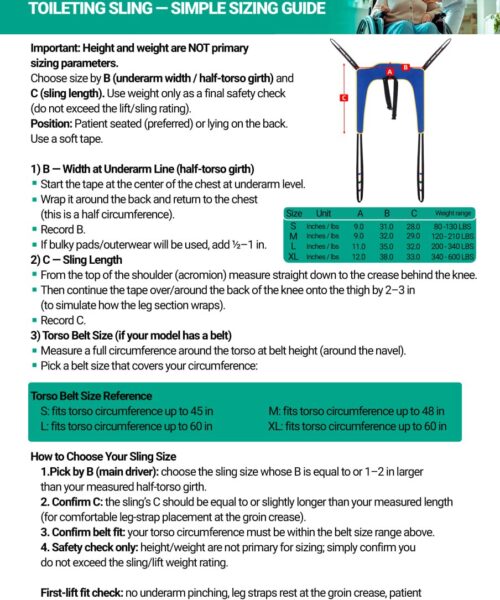
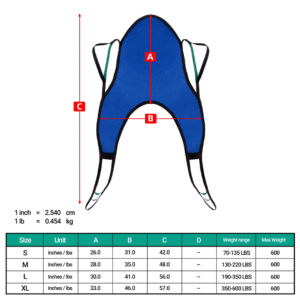
- A — Seated torso lengthSit upright (knees ~90°). Measure from the top of the shoulder (near collarbone) straight down to the back of the knee (popliteal crease).
- B — Seated hip width
In the same seated posture, measure straight across the widest part of the hips/buttocks from outer edge to outer edge (do not wrap around).
Tip: Use a soft tape. No tape? Use a string, then measure the string with a ruler.
2) Choose the Smallest Size That Fits Both A and B
Add a 1–2″ safety margin to your measurements, then match to the table.
If one size fits A but is very loose on B (more than ~4″ extra width), choose the smaller size.
| Size | A in size chart | B in size chart | Your measurements should be ≤ |
|---|---|---|---|
| S | 26″ | 31″ | A ≤ 25″ and B ≤ 30″ |
| M | 28″ | 35″ | A ≤ 27″ and B ≤ 34″ |
| L | 31″ | 41″ | A ≤ 30″ and B ≤ 40″ |
| XL | 33″ | 45″ | A ≤ 32″ and B ≤ 44″ |
Do not size by weight alone. Use A and B for fit; weight is only to confirm load capacity.
Quick Estimator (Typical Body Ranges)
Use this when a customer can’t measure right away. (Still, A + B is the gold standard.)
| Size | Typical height | Typical weight | Typical A (seated shoulder → knee) | Typical B (seated hip width) |
|---|---|---|---|---|
| S | 4’8″–5’4″ | 90–150 lb | 22–25″ | 22–30″ |
| M | 5’3″–5’10″ | 130–200 lb | 25–27″ | 26–34″ |
| L | 5’8″–6’3″ | 180–260 lb | 28–30″ | 30–40″ |
| XL | 6’0″–6’6″+ | 240–350 lb | 30–32″ | 34–44″ |
How to use:
- If a shopper’s height/weight puts them on the border, measure A and B to confirm.
- If height suggests L but B is small (narrow hips), M often fits safer than L.
- If B is large but A is short, go up one size only if the width isn’t excessively loose (aim for ≤4″ extra).
Examples (so customers “get it” fast)
- A=29″, B=27″ → M (safer width). L is long enough, but too wide.
- A=25″, B=29″ → S.
- A=30″, B=39″ → L.
- A=27″, B=33″ → M.